
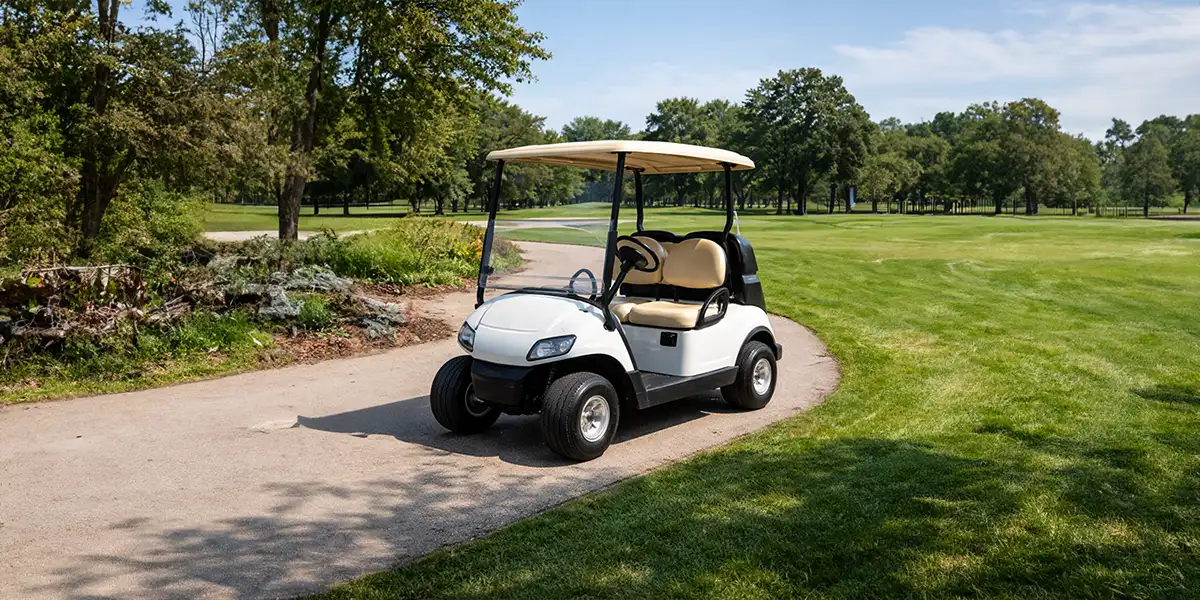
EZGO golf carts are known for their durability and reliability, but like any electric vehicle, they can develop problems over time. When a cart powers on but fails to move, or when certain components behave unexpectedly, the root cause is often related to electrical systems, mechanical wear, or a combination of both.
Understanding how to diagnose EZGO electrical issues and EZGO mechanical issues can save time, prevent unnecessary part replacements, and help get your cart running again quickly. In this guide, we’ll walk through the most common troubleshooting steps, the key components to check, and how to identify common golf cart electrical issues before they become major repairs.
Understanding How EZGO Golf Cart Systems Work
Before troubleshooting, it helps to understand the two main systems in an electric EZGO golf cart.
Electrical System Components
Electric carts rely on a network of electrical components working together:
- Batteries
- Solenoid
- Controller
- Motor
- Forward/Reverse (FNR) switch
- Wiring harness
- Key switch and throttle system
If any part of this chain fails, the cart may power on but refuse to move.
Mechanical Components
The mechanical system includes:
- Differential
- Axles
- Bearings
- Brakes
- Motor couplings
Mechanical failures are less common than electrical ones, but they can still prevent movement or cause unusual noises.
Common EZGO Electrical Issues
Electrical problems are the most frequent cause of non-moving carts.
Weak or Failing Batteries
The battery pack provides all the power to the cart. If voltage drops too low, the solenoid may click but the motor will not engage.
Signs of battery problems include:
- Cart turns on but struggles to move
- Slow acceleration
- Clicking sound without motion
- Low voltage readings
Always check battery voltage first before moving on to more complex diagnostics.
Faulty Solenoid
The solenoid acts like a heavy-duty electrical switch that sends power to the motor.
Common symptoms include:
- Audible clicking when pressing the pedal
- No movement from the cart
- Voltage readings on unexpected terminals
- Intermittent starting
If a solenoid is stuck open, power won’t reach the motor. If it is stuck closed, it may create abnormal voltage readings or constant power flow.
However, a clicking solenoid usually indicates it is attempting to engage but something else in the circuit may be preventing operation.
Forward/Reverse (FNR) Switch Problems
The FNR switch controls direction and sends signals to the controller.
Signs of FNR problems include:
- Cart only moves in one direction
- No movement in either direction
- Burning smell near the switch
- Loss of continuity during testing
Testing the switch with a multimeter can confirm whether the contacts are functioning properly.
Diagnosing EZGO Electrical Issues
When troubleshooting, following a step-by-step approach is essential.
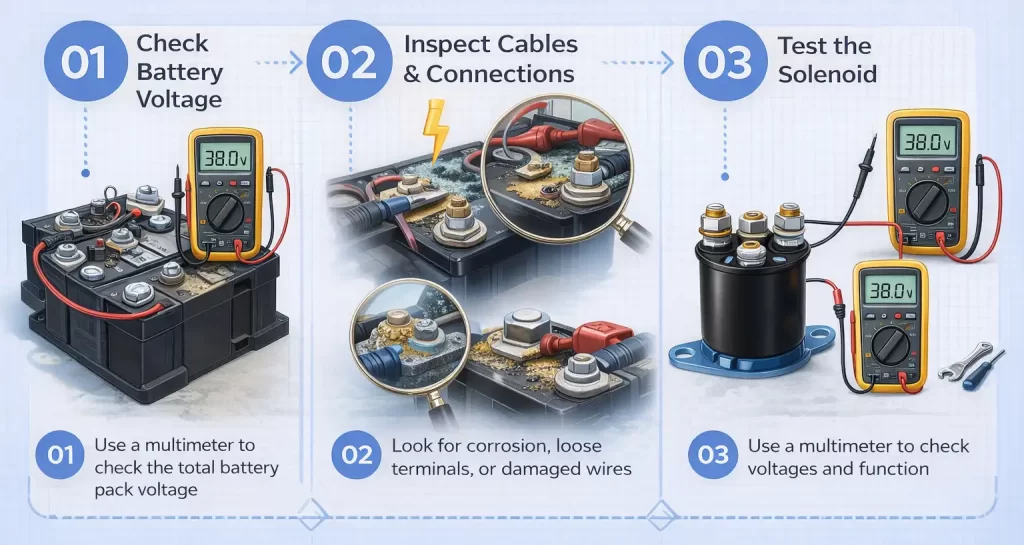
Step 1: Check Battery Voltage
Measure the entire battery pack voltage.
Typical ranges:
- 36V cart: about 38–40 volts fully charged
- 48V cart: about 50–52 volts fully charged
Low voltage can cause many symptoms that mimic other failures.
Step 2: Inspect Cables and Connections
Loose or corroded battery cables are extremely common causes of electrical failure.
Look for:
- Corrosion buildup
- Loose terminals
- Damaged wiring insulation
- Burn marks
Cleaning connections often restores proper power flow.
Step 3: Test the Solenoid
Use a multimeter to check:
- Input voltage
- Output voltage when pedal is pressed
- Activation voltage on the small terminals
If voltage appears on both large terminals without proper engagement conditions, additional circuit components should be examined.
Step 4: Inspect the Controller
The controller regulates power delivery to the motor.
Controller problems may cause:
- No movement
- Jerky acceleration
- Reduced speed
- Error codes on newer models
Controllers are more complex and may require specialized testing.
Mechanical Issues That Can Stop an EZGO Cart
While electrical faults are more common, mechanical issues can also prevent movement.
Motor Problems
If the motor is worn or damaged, the cart may show electrical activity but fail to drive.
Possible symptoms:
- Loud grinding noises
- Burning smell
- Motor overheating
- Reduced torque
Bench testing the motor can help confirm if it’s operating correctly.
Differential or Axle Damage
Internal gear damage can prevent wheels from turning.
Watch for:
- Grinding sounds
- Locked wheels
- Oil leaks from the differential housing
These issues usually require professional repair.
Brake or Bearing Seizure
Sometimes the cart is mechanically restricted.
Possible causes include:
- Seized brake components
- Locked wheel bearings
- Debris in drivetrain
Always confirm the wheels rotate freely before assuming an electrical issue.
When to Seek Professional Repair
Some electrical problems require specialized diagnostic tools or experience.
If troubleshooting steps do not reveal the issue, professional technicians can perform advanced diagnostics such as controller testing, load testing, and wiring analysis.
For more detailed assistance with Golf cart electrical Repair, professional services can inspect and repair complex systems on-site.
Technicians regularly handle complicated issues, including controller failures, wiring problems, and high-voltage component replacements.
Preventing Future EZGO Electrical Problems
Preventive maintenance is one of the best ways to avoid costly repairs.
Regular Battery Maintenance
- Check water levels monthly
- Clean corrosion from terminals
- Charge batteries after each use
- Avoid deep discharges
Routine Wiring Inspections
Periodically inspect:
- Battery cables
- Solenoid connections
- Motor terminals
- Ground wires
Loose wiring is responsible for many electrical failures.
Keep Components Clean
Dirt, moisture, and corrosion can interfere with electrical performance. Keeping components clean improves reliability and extends component life.
EZGO Troubleshooting FAQ’s
A clicking sound often indicates the solenoid is activating, but the cart may not move due to low battery voltage, a faulty controller, wiring issues, or motor problems.
Yes. Depending on circuit conditions and testing methods, voltage may appear on both terminals. However, this does not always mean the solenoid is functioning correctly.
Common signs include overheating, grinding noises, reduced torque, and failure to rotate even when proper voltage is supplied.
Battery problems are the most common cause of golf cart failures, followed by solenoid faults and corroded wiring connections.
Yes. A properly working solenoid usually produces a noticeable click when the accelerator is pressed and the electrical circuit activates.
If basic tests do not reveal the problem or if components like the controller or wiring harness may be involved, it is best to consult professionals experienced in diagnosing golf cart electrical issues.
Conclusion
EZGO golf carts are built to last, but electrical and mechanical problems can develop over time. When a cart powers on but refuses to move, the issue is often related to battery health, solenoid operation, wiring connections, or controller behavior.
By understanding how the electrical system works and following a structured troubleshooting process, many common problems can be identified quickly. Regular maintenance, proper testing tools, and occasional professional inspections help ensure your golf cart continues running smoothly for years to come.
