
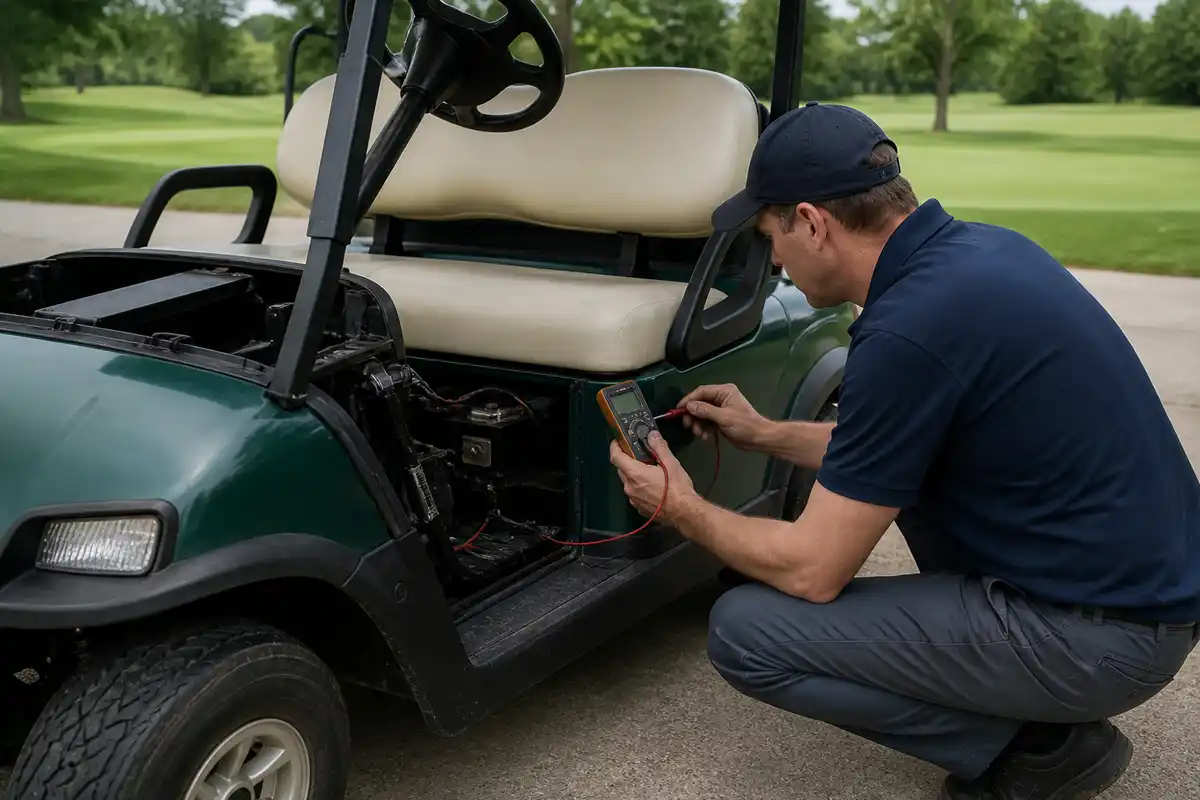
Summary: If your golf cart moves forward but refuses to go in reverse, the issue is almost always tied to the reverse control circuit rather than the motor itself. The most common culprit is a failed reverse microswitch, especially on carts with a forward and reverse lever assembly. Other likely causes include worn directional switches, damaged wiring, or a faulty controller not receiving the reverse signal. This guide walks through how reverse actually works, how to diagnose the failure step by step, and how to fix it without guessing.
When a golf cart drives perfectly forward but refuses to back up, it creates a very specific diagnostic situation. Unlike a cart that will not move at all, this problem narrows your focus to one system: direction control.
Forward motion proves that your batteries, motor, and main drive system are functioning. Reverse failure tells you the signal that commands reverse is not being completed. That is good news because it eliminates a lot of expensive possibilities right away.
The key is understanding how reverse is triggered and where that signal can break down.
How Reverse Actually Works
On most electric golf carts, reverse is not a separate motor function. The same motor spins in the opposite direction when the system receives a reverse command.
That command starts at the forward and reverse selector, typically a lever or rocker switch. When you shift into reverse, several things happen at once:
- A microswitch activates to signal reverse
- The controller receives that signal
- The solenoid engages in the correct direction
- The motor spins in reverse polarity
If any part of that chain fails, reverse disappears while forward still works.
Most Common Cause: Reverse Microswitch Failure
Here is the pro move that experienced technicians check first:
Reverse microswitch failure frequently disables reverse only
Inside the forward and reverse assembly are small switches that detect lever position. Over time, these wear out, fall out of alignment, or stop making proper contact.
This is especially common in high use carts or carts exposed to dust, moisture, and vibration.
Symptoms of a bad microswitch
- Cart drives forward normally
- No movement in reverse
- No click or response when switching to reverse
- Backup buzzer does not activate
If your cart shows these signs, the microswitch is the first place to look.
What to check
Remove the cover to access the forward and reverse assembly. Inspect the microswitch tied to the reverse position. Look for:
- Loose mounting
- Bent actuator tab
- Corrosion on terminals
- Worn or broken switch
A simple adjustment or replacement often restores reverse immediately.
Directional Switch Wear and Failure
If your cart uses a mechanical forward and reverse switch rather than a small microswitch system, internal contacts can wear out.
These switches handle electrical load and eventually degrade. Reverse often fails first because it is used less frequently, allowing corrosion or oxidation to build up.
Signs of directional switch problems
- Intermittent reverse
- Reverse works only when holding the lever in a certain position
- Visible burning or discoloration on contacts
- Stiff or loose lever feel
In this case, cleaning may provide a temporary fix, but replacement is the long term solution.
Wiring Issues in the Reverse Circuit
Wiring is another common failure point, especially in older carts or those used outdoors year round.
The reverse signal travels through a dedicated wire path. If that path is interrupted, the cart will never receive the command to reverse.
Common wiring problems
- Loose connectors
- Corroded terminals
- Broken wires near the selector
- Rodent damage in stored carts
A visual inspection goes a long way here. Tug lightly on connections and look for anything that feels weak or brittle.
A multimeter can confirm continuity if the issue is not obvious.
Controller Not Receiving the Reverse Signal
Modern electric golf carts rely on an electronic controller to manage motor direction and speed.
If the controller does not receive the reverse signal, it simply continues to allow forward operation only.
Possible causes
- Failed input circuit on the controller
- Damaged signal wire
- Fault in the switch that feeds the controller
This is less common than switch failure but still possible, especially in carts with upgraded controllers or aftermarket modifications.
Before blaming the controller, always verify the switch and wiring first. Controllers are expensive and rarely the root cause in this specific symptom.
Solenoid and Contactor Issues
The solenoid plays a role in delivering power to the motor. While it usually affects both directions, there are situations where reverse operation is impacted.
When to suspect the solenoid
- You hear a click in forward but not in reverse
- Reverse produces no electrical engagement sound
- Cart feels completely dead only in reverse
This points to a signal issue reaching the solenoid or the solenoid not engaging properly under reverse conditions.
Mechanical Linkage Problems
Some golf carts use a physical linkage connected to the forward and reverse selector. If this linkage becomes misaligned or worn, it may fail to engage the reverse switch properly.
Look for
- Loose linkage rods
- Misaligned selector mechanism
- Excess play in the lever
This is often overlooked because it is a mechanical issue causing an electrical symptom.
Step by Step Diagnostic Approach
To avoid replacing parts unnecessarily, follow a logical process.
Start at the selector and work your way forward through the system.
- Confirm forward works normally
- Listen for any response when switching to reverse
- Check the reverse microswitch
- Inspect the directional switch assembly
- Examine wiring connections
- Test signal reaching the controller
- Evaluate solenoid behavior
This sequence isolates the issue quickly and prevents guesswork.
Gas Golf Cart Considerations
Gas powered carts handle reverse differently. Instead of reversing motor polarity, they use a reverse gear in the drivetrain.
If a gas cart will not reverse but drives forward, the issue is more likely mechanical.
Common causes in gas carts
- Worn or damaged reverse gear
- Shift cable misadjustment
- Internal transmission wear
Even so, many gas carts still use a microswitch for reverse safety features or alarms, so electrical checks are still worth performing.
Community Insight
“Most people assume something major failed, but it’s almost always the little switch inside the forward and reverse assembly. If forward works fine and reverse is dead, that microswitch is usually the culprit. They wear out way faster than anything else in the system.”
Recurring community consensus across golf cart owner forums and technician discussions, including insights commonly shared on Buggies Gone Wild and similar communities.
Preventing Reverse Problems
Reverse issues are often preventable with basic maintenance.
Keep the forward and reverse assembly clean and dry. Avoid slamming the selector between positions. Periodically inspect wiring and connections.
If your cart operates in dusty or wet environments, consider routine cleaning of electrical components to extend their life.
Related Services:
Frequently Asked Questions
Why does my golf cart go forward but not backward?
Because the reverse signal is not reaching the system. Most often this is due to a failed microswitch or worn directional switch.
How do i know if my golf cart microswitch is bad?
If nothing happens when you switch to reverse and the backup buzzer does not activate, the microswitch is a strong suspect.
Can a solenoid cause no reverse only?
It can, but it is less common. Usually the problem is upstream in the switch or wiring.
Is it expensive to fix reverse on a golf cart?
Most fixes are inexpensive. Microswitches and wiring repairs are low cost. Only controller failures tend to be expensive.
Why does my reverse only work sometimes?
That usually points to a worn switch or loose connection that only makes contact in certain positions.
Can i drive my golf cart if reverse is not working?
Yes, but it is inconvenient and can be unsafe in tight areas. It is best to fix it before regular use.
Still Need Help? Connect with our Texas Mechanics
Call or Text Golf Cart Service Center: 214-233-5528
Service Areas: Dallas, Fort Worth, Plano, Arlington, Frisco, McKinney, Tyler, Houston, Austin and beyond!
