
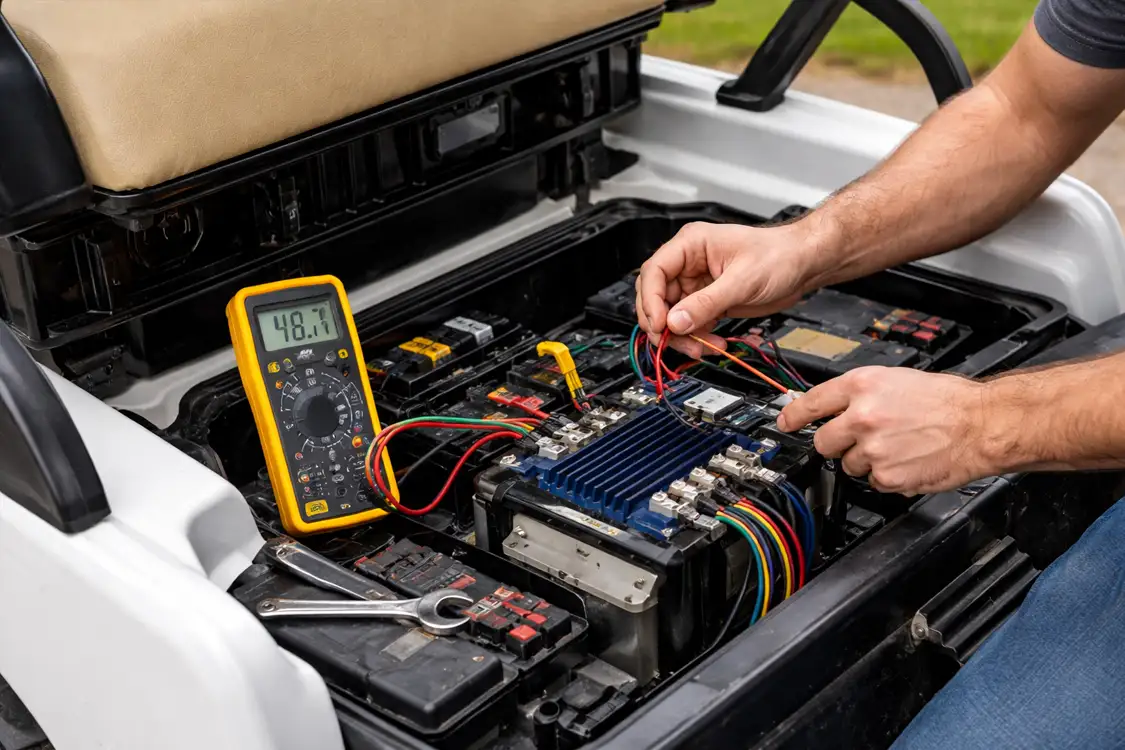
Summary: Golf cart controllers manage the flow of power from the batteries to the motor, regulating speed, acceleration, and braking. Controller problems can cause erratic speed, sudden power loss, or complete failure. Common causes include voltage spikes, improper upgrades, worn components, or wiring issues. Diagnosing controller problems involves checking voltage input, inspecting wiring, and monitoring performance under load. In many cases, replacement or professional servicing is required for reliable operation.
What the Controller Does
The controller is essentially the brain of an electric golf cart. It regulates the amount of electrical current delivered to the motor based on input from the accelerator pedal. This determines acceleration, speed, and smooth operation of the cart.
Controllers also protect the motor and batteries from overload by limiting current in certain situations. Modern controllers may include thermal protection, error codes, or diagnostic lights to signal internal issues.
Because it interfaces with many components, any problem in the controller can mimic other issues such as weak acceleration, intermittent power, or complete non-operation.
Failure Symptoms
Controller problems can present in several ways:
- The cart may move only at reduced speeds or jerk unpredictably.
- Acceleration may be delayed or unresponsive.
- Cart may stop suddenly while driving, even if the batteries are fully charged.
- Error lights or diagnostic codes may appear on the controller if equipped.
It’s important to rule out other electrical causes first, such as batteries, wiring, or the solenoid, before concluding that the controller itself is at fault.
Testing the Controller
Begin by inspecting the controller for obvious signs of damage such as burned components, melted connectors, or corrosion.
Next, check voltage at the input terminals. A proper voltage reading indicates that power is reaching the controller. If the voltage is correct but performance is poor, the issue is likely internal.
Load testing is another key step. Observe how the controller responds when the accelerator is pressed. Any delayed response or inconsistent power delivery suggests internal wear or failure.
Always follow manufacturer guidelines for testing. Some controllers include built-in diagnostics or LED blink codes to indicate specific failures.
Replacement and Repair
When a controller fails, repair is often limited due to the complexity of the electronics. Replacement is usually the most reliable solution.
Before replacing, verify that the replacement is compatible with your cart’s voltage, motor type, and configuration. Using an incompatible controller can damage the motor or batteries.
After installation, retest all connections and monitor performance under load. Properly installed controllers should restore full functionality and eliminate erratic behavior.
Regular inspection and protection against voltage spikes, water ingress, and improper upgrades can extend controller lifespan and prevent future failures.
| Forum Insight: Many controller failures occur after voltage spikes or when an incorrect upgrade is installed. Experienced users recommend always matching controller upgrades to battery voltage and motor type to avoid permanent damage. Source: https://cartaholics.com/threads/controller-failure-after-upgrade.22311/ |
Frequently Asked Questions
What does a golf cart controller do?
It regulates the flow of electricity from the batteries to the motor, controlling acceleration, speed, and power delivery.
What are common signs of controller failure?
Erratic acceleration, reduced speed, sudden stops, and diagnostic codes or error lights.
Can a controller be repaired?
Minor repairs may be possible, but replacement is usually recommended due to the complexity of internal electronics.
How do I test if the controller is bad?
Check input voltage, observe performance under load, inspect for visible damage, and refer to any built-in diagnostic codes.
Will a wrong replacement controller damage my cart?
Yes. Installing a controller that doesn’t match your cart’s voltage or motor type can permanently damage the motor or batteries.
Related Service: Golf Cart Electrical Repair Service
Still Need Help? Connect with our Texas Mechanics
Call or Text Golf Cart Service Center: 214-233-5528
Service Areas: Dallas, Fort Worth, Plano, Arlington, Frisco, McKinney, Tyler, Houston, Austin and beyond!
